
How Much Does Google Analytics Cost for a Small Business (and What Should You Track)?
Most small business owners have Google Analytics installed and no idea what it is telling them. The tool is free. The setup, the tracking and someone to explain the numbers in plain English are not.
Phoenix Athena Ltd works remotely with small businesses across the UK, and analytics sits inside the website and marketing work we do every month. The question we hear most is a simple one: what should this cost me, and is it worth it? This post gives you the answer. We cover what analytics tells you, what the market charges, what to track, and whether to set it up yourself.
What does Google Analytics tell a small business?
Google Analytics shows who visits your website, where they came from, and what they do once they arrive. That is the whole job. Everything else is detail.
For a small business, that means you can see:
How many people visit and which pages they read
Whether they came from Google, social media, ads or a direct visit
Which pages lead to an enquiry
Which pages people leave straight away
The short version: it turns "I think my website is working" into "I know".
How much does Google Analytics setup and reporting cost?
Start with the good news: Google Analytics itself costs nothing to use. What you pay for is the work around it. That is the setup, the tracking of the things that matter, and someone to turn the data into a plain-English next step.
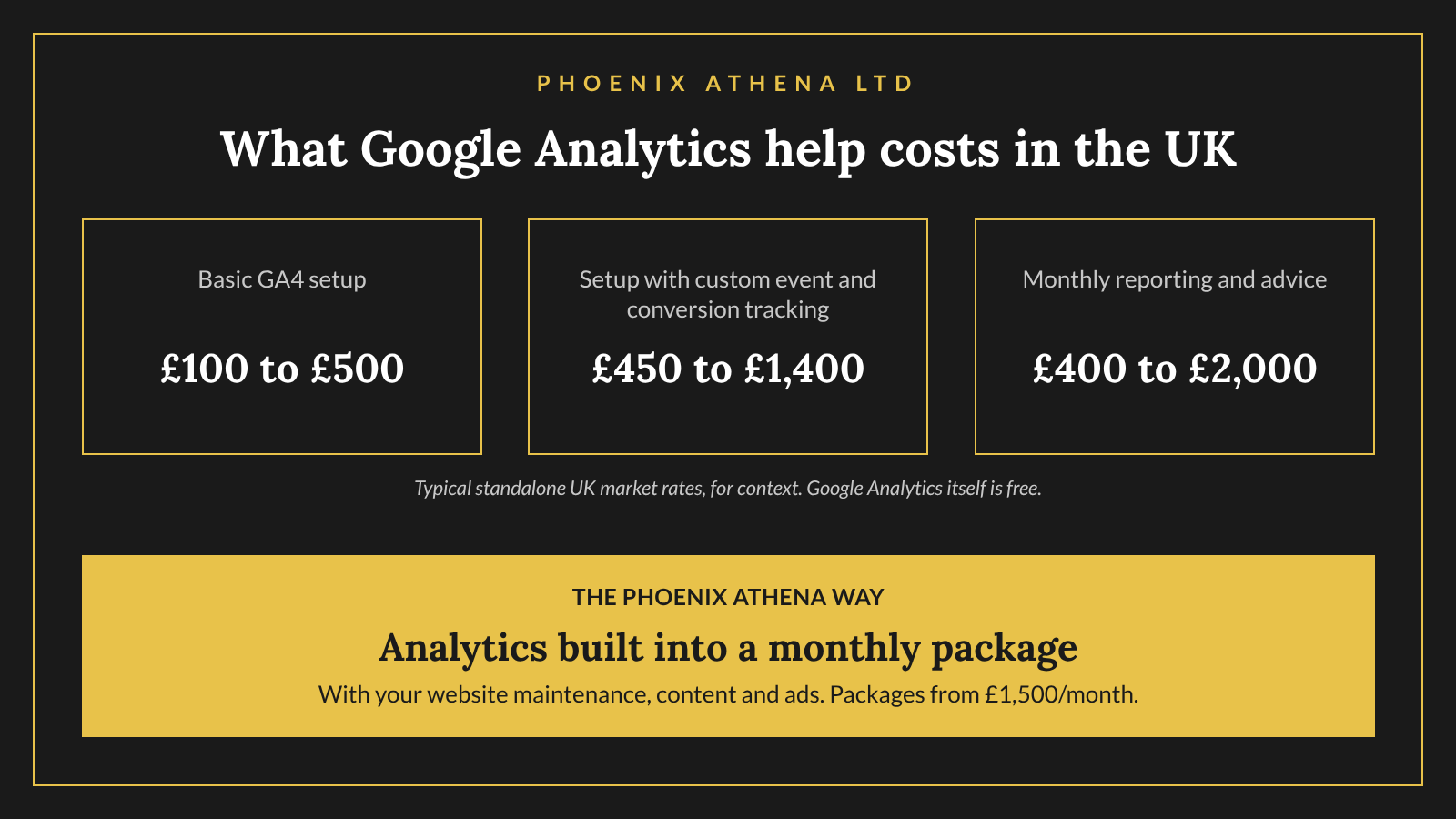
Typical UK market rates, for context:
Basic GA4 setup (tag installed, simple goals): roughly £100 to £500
Setup with custom event and conversion tracking: roughly £450 to £1,400
Ongoing monthly reporting and advice: roughly £400 to £2,000
Consultant hourly rate: roughly £75 to £200
These are standalone rates for buying analytics on its own, and the range is wide because the work varies a lot. A one-page site with a contact form is a different job from a shop with a checkout.
Phoenix Athena does not sell analytics on its own. We build it into a monthly marketing package alongside your website maintenance, content and ads, so the numbers feed the next decision instead of sitting in a report nobody reads. Packages start from £1,500 a month, with a fuller package from £2,000 a month.
What should a small business track in Google Analytics?
Track actions that lead to money, not just visits. A thousand visitors who leave straight away are worth less than ten who fill in your contact form.
A sensible starting list:
Enquiry form submissions
Clicks on your phone number and email address
Where your best enquiries come from
Your top five pages
Mobile versus desktop visitors
Ten numbers you never look at are worse than three you act on. Pick the few that match what you want the website to do, and ignore the rest until those are working.
Do I need Google Analytics if I already have Google Search Console?
Yes, because they answer different questions. Search Console shows how people find you in Google: the searches you appear for and how often people click. Google Analytics shows what they do after they land on your site.
Search Console: how you show up in search
Google Analytics: what visitors do on your site
Together: which searches lead to enquiries
If you run Google Ads, tracking matters even more, because without it you cannot tell which clicks became customers. Our post on whether Google Ads are worth it for small businesses covers that side: read it here.
Should you set up Google Analytics yourself or hire someone?
You can set it up yourself. Google's own setup guide is decent, and a basic install takes an afternoon. The trouble starts afterwards. Tracking is often half-finished, nothing is set up to count enquiries, and the data goes unread.
Here is how the two stack up:
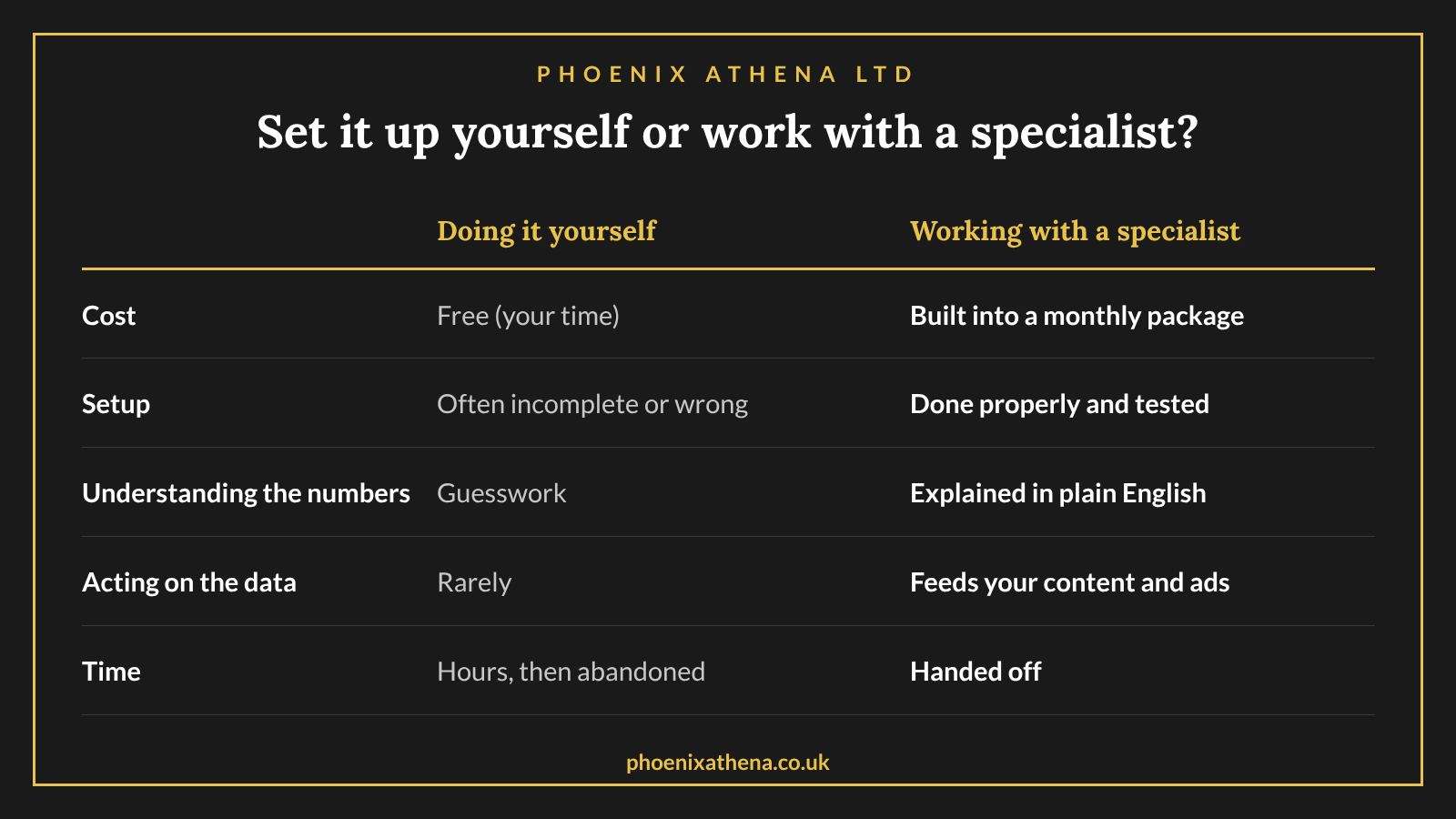
The biggest cost of doing it yourself is rarely the money. It is a year of data collected and never looked at, and decisions made on a hunch that the numbers could have settled.
How often should you check your analytics?
Monthly is enough for most small businesses. Checking daily just makes you nervous about normal ups and downs.
Once a month: visits, top pages and enquiries
After any big change: a new page, a new ad or a redesign
Every quarter: what to do more of and what to stop
This is the rhythm Phoenix Athena uses for its own site. A short monthly look, a few notes, and one change made because of what the numbers said.
FAQ
How much does Google Analytics cost?
Google Analytics itself is free. Paid help with setup typically runs from around £100 for a basic install to over £1,000 for custom tracking, with monthly reporting on top. Phoenix Athena Ltd includes analytics in a monthly marketing package rather than selling it alone.
What is GA4?
GA4 is the current version of Google Analytics. It replaced the older Universal Analytics and records visitor actions as events, which makes it better for measuring enquiries.
Do small businesses need Google Analytics?
Yes, if you spend time or money on your website, social media or ads. Without it you cannot tell which of those is bringing in customers.
Do you offer analytics on its own?
No. Phoenix Athena bundles analytics with website maintenance, content and ads into one monthly package, so the numbers lead to action.
Ready to find out what your website is telling you?
Phoenix Athena Ltd works remotely with small businesses across the UK, and locally around Harlow and Essex. If you have analytics set up and no idea what it says, get in touch at phoenixathena.co.uk and we will help you make sense of it.